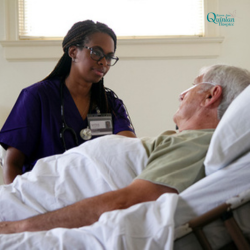
When Is It Time To Choose Comfort Care?

When the doctor says, “We are having a difficult time fixing you;” “I can’t fix you, let’s talk about comfort care;” “We have tried everything and the treatments are not working to eliminate the disease progression;” “I can not give you the quality of living that we were hoping for with the treatments at our disposal;” or “Let’s talk about how you can best live your life from this point forward,” — This is the time to consider end of life comfort care.

These are the words I wish physicians had the courage to say to their patients who are facing life threatening conditions. To qualify, some physicians do address these issues with their patients in a timely manner but, honestly, many do not. 

Remember, the medical model treats diseases that people have, not necessarily people that have disease. In today’s medical model disease is to be “fought” at all costs. Often the motivation for treatment is that what we learn from one patient’s experience, disease progression, success or failure, will help us learn how to treat others more successfully.

Unfortunately, this medical approach does not take into consideration that the body is programmed to die. Everybody dies and one of the ways it dies is because of disease.

Taking the above into consideration, it is really up to us, the patient and family, to look for the success or decline in the treatment options and progression. I am suggesting we consider all options with a clear vision of how we can live life in its best possible way, to look at life as being more than just the body breathing.

What can we look for that tells us when it is time to consider comfort care and not aggressive treatment options? Comfort care being palliative care, hospice care, and/or End of Life Doula support.

1. In spite of treatment the disease continues to progress, invade, cause pain and bodily symptoms. This appears so obvious yet in our desperation to stay alive, we often ignore the very message our body is trying to tell us.

Click here for the full story: https://bkbooks.com/blogs/something-to-think-about/when-is-it-time-to-choose-comfort-care

Writing Our Final Chapter More Meaningfully

The experience of dying a gradual death is an important, integral part of life. It is an opportunity to write our final chapter, to define the ending of our story…

All the space between birth and death is living. YET we tend to conceptually segregate our final experience off from all that has preceded it.

The experience of dying a gradual death is an important, integral part of life. It is an opportunity to write our final chapter, to define the ending of our story. 

How we face our impending death can result in our finest work. Or we may be so frightened in the face of this terrifying challenge that we can’t quite get ourselves to rise to the occasion. The part of our life that is associated with dying, that final challenge, will be met in the same way we have dealt with any other challenge in our life. A doer will get things done and address issues straight on. A procrastinator not so much. A talker will probably become more chatty, an introvert will probably be even quieter. Our personality doesn’t change; it intensifies.

Click here to read the full story: https://bkbooks.com/blogs/something-to-think-about/writing-our-final-chapter-more-meaningfully

The Part of Grief You Don’t Know — Until You Do

Now I have to learn how to be a widow. How to create a new life, a new way of being. I am truly alone. 

As a new widow (that word sounds strange and startling) I have had many new insights. In my work in end of life, the focus has been on approaching death. Grief has been an afterthought, not a primary issue. With Jack’s death, I know how powerful grief is.

Emotionally, now a month after Jack’s death, I am still kind of numb. I haven’t cried since his death. The tears are generally behind my eyes. I can feel them but can’t or won’t let them out.

I am not my gentle, understanding self. I am impatient. I am not necessarily being sociable or even being polite. I am sharp and edgy. That is not who I consider myself to be.

Little things I never thought of before have come to light. Who do you talk to when you get up in the morning? Baxter, my cat, gets my words. Who do you eat with, sit at the table with, watch TV with? No one other than Baxter.

How do you go to bed at night? Close the door to the bedroom? Lock the bedroom door? Leave a light on? For 65 years, Jack has been in my life. He was part of everything and I didn’t even realize it. 

Click here to read the full story: https://bkbooks.com/blogs/something-to-think-about/the-part-of-grief-you-dont-know-until-you-do

Beyond the Diagnosis: The Power of Plain Words

Clear communication is one of the most powerful tools in healthcare. Healing begins when we sit close, speak simply, and remember that care is about people, not just disease.

A friend went to an oncologist for a medical problem. Yes, there was a problem, the doctor said – and then proceeded to explain in complicated medical terminology. Words and explanations that were totally out of my friend’s (and most people’s) knowledge and comprehension.

A personal and all-too-common example comes from the time my mother and I were at her oncology appointment. She was sitting on the end of the exam table in a skinny, open-backed gown. The doctor was explaining her disease progress and prognosis. All the while he was talking, she was nodding her head up and down as you would if you understood and agreed. I didn’t understand what he was talking about despite my medical knowledge, so I knew she didn’t. Also, he was standing several feet away from her, arms folded. I’m sorry to say this is not an isolated occurrence.
People don’t want complicated medical explanations from their doctors or medical people. They want simple, everyday words. They want guidance, reassurance and support as well as information. They want truth and options in a format they can understand. I had a friend say, “I have a PHD, but that doesn’t mean I understand the language of medicine.”
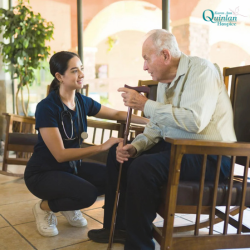
Did you notice in my explanation above that the doctor was standing and actually a good distance away as he talked? When talking to really be heard, sit close enough to touch and at or below eye level. You are setting the stage to be heard — really heard and understood. 

Click here to read full story: https://bkbooks.com/blogs/something-to-think-about/beyond-the-diagnosis-the-power-of-plain-words

Caregivers Carry The Burden

My hope in writing this blog is to draw our attention to the “unsung heroes” caring for their special person as end of life approaches, as well as to those caring for family and significant others who are not dying but in need of care.

Taking care of someone as they approach the end of their life is hard, scary, frustrating, sad, and often guilt-ridden work. Caregivers carry the burden of care but are often invisible.

We tend to give our attention to the patient by focusing on their wants, needs and changes. We come, often bringing gifts and food, and we sit with the patient. We talk, tell stories, try to laugh, then we say goodbye and leave. 

Meanwhile, the caregiver is behind the scenes doing all the work, receiving no attention, receiving no acknowledgment.

My hope in writing this blog is to draw our attention to the “unsung heroes” caring for their special person as end of life approaches, as well as to those caring for family and significant others who are not dying but in need of care. These people do the physical work while carrying the emotional burden of caring for someone they know and have a relationship (positive or negative) with.

Caregiving is 24/7 work. The nights are usually the hardest. The dark, quiet, alone time is when it seems the “goblins” of fear, exhaustion, and general tiredness come out. 

Click here to read the full story: https://bkbooks.com/blogs/something-to-think-about/caregivers-carry-the-burden

For Those With Heavy Feelings of Loss

How to let go and stop feeling guilty? At first you probably aren’t even aware of your feelings. When someone close to us dies, even if we are told it is going to happen, we are in shock, numb. As the numbness wears off  we start feeling guilty…

Barbara, After death, especially of a loved one, how do you let go and stop feeling guilty when you have no reason to feel guilty.

Guilt seems to come with loss. We burden ourselves with questions we can never answer, with “What if ” and “Why didn’t I”. We repeatedly berate our selves with “I should have” thoughts. Every time we ask ourselves one of these questions more guilt is piled upon more guilt until we are buried (pardon the use of the word) with remorse.

You are right, most of the time there is no reason to feel this guilt, although sometimes there is. Either way it is unproductive. It only complicates the normal grieving process.

How to let go and stop feeling guilty? At first you probably aren’t even aware of your feelings. When someone close to us dies, even if we are told it is going to happen, we are in shock, numb. As the numbness wears off we start feeling guilty. That’s when the “what if’s” set in.

Click here to read full story: https://bkbooks.com/blogs/something-to-think-about/the-heavy-feelings-of-loss

When Our Emotions Blind Us From What Is Happening

I knew all the signs of approaching death, of labor beginning. What I didn’t know was how much we don’t want to see those signs, and by not wanting to see them, we often don’t.

As most of you know my husband died September 18. It was my turn to walk on the other side of hospice. He was diagnosed in May with cancer of the lung. At 89, we decided treatment would hinder his quality of living. At 89, any disruption of our “normal” can turn into a downward spiral. We wanted him to live his best life while he could.

It is interesting to me that with all my knowledge, I fell into the trap most people find themselves in: not wanting to see what is really happening. Intellectually I knew the signs and patterns of approaching death, but emotionally I kept pushing food and seeking engagement. AND experiencing the frustration those actions were building.

It took a day of anger to recognize I was concentrating on keeping him alive while he was preparing to die. It took anger to begin accepting what was happening. Actually, “accepting” is not the right word, because it will never be okay. Let’s use the word “understanding.” It took anger to understand what the future was bringing.

Click here to read full story: https://bkbooks.com/blogs/something-to-think-about/do-you-see-that-he-is-dying

Not Every Patient Is a Battle to Win

Over the years, I have given inservice trainings on a variety of hospice-related topics to various hospitals, Grand Rounds, or monthly physician’s meetings.

I talked about end of life care and the ways hospice does and does not fit into the medical model. It was always a hard sell. It seemed at every meeting a physician would state that the medical model is “never stop trying.” By never admitting defeat we learn to help others, to cure disease. The medical model of always treating is how disease is conquered.” 

I agree with that philosophy. We learn from each situation. We learn what to do and what not to do. What works, helps, and what doesn’t. What I don’t agree with is making it an across the board, “we never stop trying” policy.

Everyone dies. Death will not be conquered. It can be forestalled and that is where the medical model comes in. We learn through trying. The medical rounds physician is correct — BUT (I knew you were waiting for the BUT) I think the patient has the right to make that decision, not the physician. 

Click here for full story: https://bkbooks.com/blogs/something-to-think-about/not-every-patient-is-a-battle-to-win

Considering Palliative Care? Four Simple Ways to Get Started

If you or a loved one are living with a serious illness, you may be looking for care that can help relieve symptoms, improve quality of life, and support you and your family. Palliative care does that and more.

Palliative care is specialized medical care that focuses on providing relief from the symptoms and stress of a serious illness—no matter the diagnosis or stage of illness. The goal is to improve quality of life for both the patient and the family.

But how do you know if palliative care is right for you? And how do you find a provider near you? Here’s are a few tips to get you started.

1. Talk to Your Doctor and Ask for a Referral

Start by speaking with your doctor, as they’ll be the one to refer you to palliative care. This would be the doctor, such as an oncologist, cardiologist, or neurologist, who diagnosed your serious illness. If they haven’t mentioned palliative care on their own, it’s okay to bring it up and ask if palliative care can help you manage symptoms or improve your quality of life—and ask for a referral.

Tip: If you’re unsure if palliative care is right for you, you can take a quick 5-question quiz about your symptoms, diagnosis, and support needs. Based on your answers, the quiz will determine whether palliative care can help. Remember, you can receive palliative care at any point of your illness.

2. Find a Palliative Care Provider

Once you and your doctor determine if palliative care is right for you, it’s time to find a palliative care provider in your area. If you’re admitted to the hospital, your doctor will ask the hospital’s palliative care team to visit you. If you’re living at home or another place within the community, your doctor will refer you to a palliative care doctor they trust.

If your doctor doesn’t have someone in mind, they can check out the Palliative Care Provider Directory on GetPalliativeCare.org. This directory is searchable by ZIP code and care setting (whether it’s a hospital, office/clinic, home, or nursing home), and includes palliative care programs that have listed themselves.

Click here for the full article: https://getpalliativecare.org/considering-palliative-care-four-simple-ways-to-get-started/

Hoping For A Miracle

An internet search defines a miracle as: “a surprising and welcome event that is not explicable by natural or scientific laws and is therefore considered to be the work of a divine agency.” I, Barbara, define “a miracle” as “an event attributed to a supernatural being (God or gods), a miracle worker, a saint, or a religious leader.” It is an event that seems to defy all logic.

With that definition, you have to be a pretty high stakes gambler to bet your life (literally) on the idea that a miracle is going to cure your life threatening illness.

People tend to miss what is in front of them, which is the present moment. How many of us live in past memories or future ideals? Most of us don’t live in the immediate moment — and it is that  moment that sets the stage for what follows — for the future.

Click here for the full story : https://bkbooks.com/blogs/something-to-think-about/miracles

Traveling The Road of Grief

Grief is a lot about the empty space they left behind. It is learning how to fill the space we had when we were a “we” that has become a space of emptiness now that we are an “I.”

I think the major revelation you all gave me with your suggestions is there are many kinds of “we,” not just a partner “we.” Baxter cat and I are a “we.” Actually so are the birds, squirrels and fish that I am responsible for. Family makes me a “we.” My friends make me a “we.” You see what I am saying. I am not as alone as I thought.

Click here for the full story: https://bkbooks.com/blogs/something-to-think-about/traveling-the-road-of-grief

Why Knowing the Dying Process Can Change How We Live

We are born, we experience, and then we die. That is how the “game” of life works. If it is a guarantee of life that living will at some point end, why do we have such a challenge coming to terms with a terminal diagnosis?

Yes, medical advances have been amazing in curing and healing, BUT death will still come at some point.

There are two ways to die. Fast is one way, where you have a heart attack or a stroke or you’re hit by a truck. The body is alive one minute and dead the next. There is no process here. It is immediate. There are no signs, no warnings. A person is literally alive one minute and dead (for whatever reason) the next. 

Click the link for the full story: Why Knowing the Dying Process Can Change How We Live

Caring for the Person, Not Just the Disease

We health workers feel we have to do something. We have to take blood pressure, pulse, temperature, check peeing and pooping, and do assessments.

With approaching death, it isn’t so much doing something as it is just being there.

Emotional support, guidance for caregivers, and listening are our best tools. Addressing humanity is end of life work.

End of life work takes the focus off the disease and increases the attention on the humanity of a person. It focuses on the person that has a disease instead of the disease that the person has. I’m not saying you shouldn’t focus on the disease and its treatments. I’m saying focus on the human being that has a disease, and only THEN look at the malady.

Follow the link for the full story : https://bkbooks.com/blogs/something-to-think-about/caring-for-the-person-not-just-the-disease

Denial of a Life Limiting Illness

Denial by the person with a life threating illness, denial by the caregiver, and I’ll even add denial by some attending physicians. Denial is often the reaction to diseases that have reached the point of not being fixable.

It can’t be me. It can’t be my special person. The doctors are wrong. If we do everything the physician recommends, we’ll be fine. If we do all the “right things” (eating, exercising, not smoking, not drinking alcohol, praying) everything will be okay. AND if the doctors are right in saying the disease isn’t fixable, then there will be a miracle and death will not come. Other people die, not me or even anyone close to me.

Click here to read the full story : Denial of a Life Limiting Illness

Veterans Lunch & Recognition Ceremony

Veterans and their spouses are invited to join us on November 11th from 12pm – 2pm for a delicious complimentary lunch at Belle Reve provided by Quinlan Care Concepts/Karen Ann Quinlan Hospice. Each Veteran will also receive a commemorative certificate and pin.

RSVP by November 7th to Heather at (570)-221-6014 or email HMarrocco@bellerevesl.com

Belle Reve – 404 East Harford Street, Milford PA 18337